
Guava (Psidium guajava) or in Bangla, as we call it, Peyara is another rainy season fruit in Bangladesh. It is really a wonder of nature that rainy season provides a plenty of fruits that consist vitamin C in great amount. We all know the benefits of vitamin C for our health, so will not go into details. But I want to mention that in Bangladesh, we get guava, hogplum, lotkon, pomelo, star apple during rainy season, that trully shows how rich the climate and soil is in Bangladesh!

Guava is eaten as a fruit mainly, but it is slight tangy. So we either eat it with salt and other condiments or make a pickle. In today’s blog, I will show how we eat with condiments,like Kashundi, black salt or chili flakes. In Bangladesh, it is very popular street food, as we call it peyara makha (I don’t have a proper English name yet for the word “makha” so I will call it salsa).

We just need to wash the fruit first and cut into our desired shape. When you cut it in the middle, you can see the fruit has tiny but hard seeds inside. The middle part is the best tasting, sweet, crunchy and has no seeds. When I was a kid, I used to eat only the middle part!

After cutting guava into bite size pieces, I added Kashundi, chili flakes, tamarind sauce and black salt. You can add little sugar, or skip tamarind or Kashundi if you don’t like them. Or just eat with simple chili powder and salt.
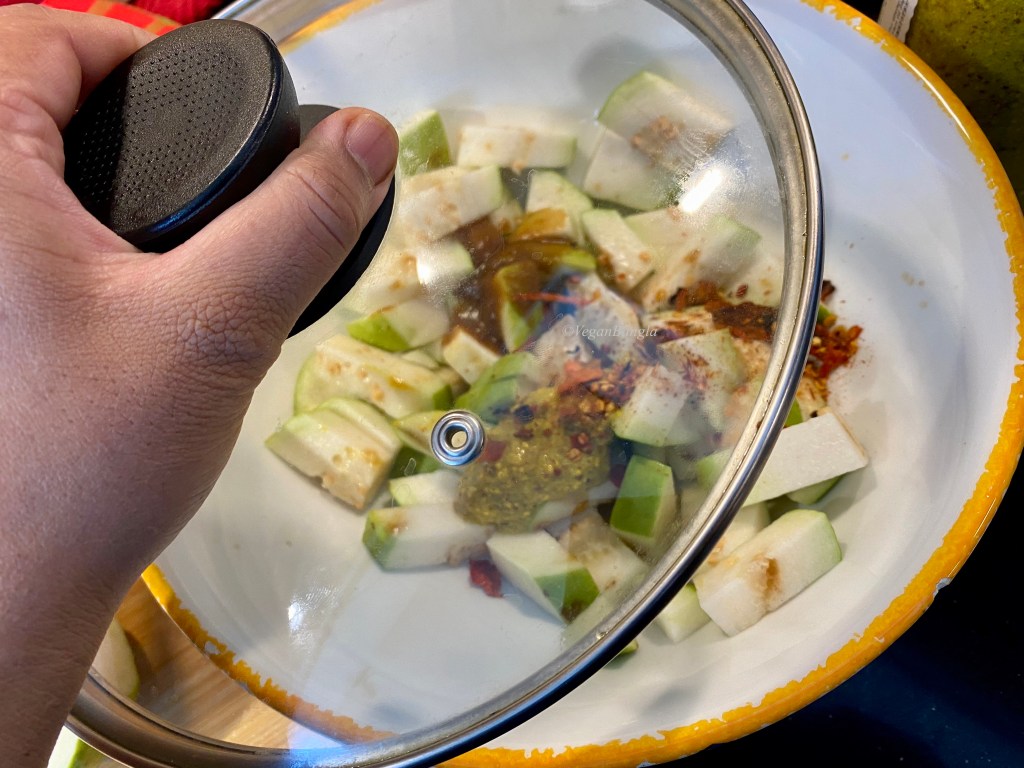
Then I covered the bowl with a lid and shaken the hell out of it!!! The more you shake, the more it will open up with flavor, so trust me, you must do this step!

Now the Peyara makha is ready to eat! Its a very healthy snack, which not only provides vitamin C but also aids in digestion and eye sight!
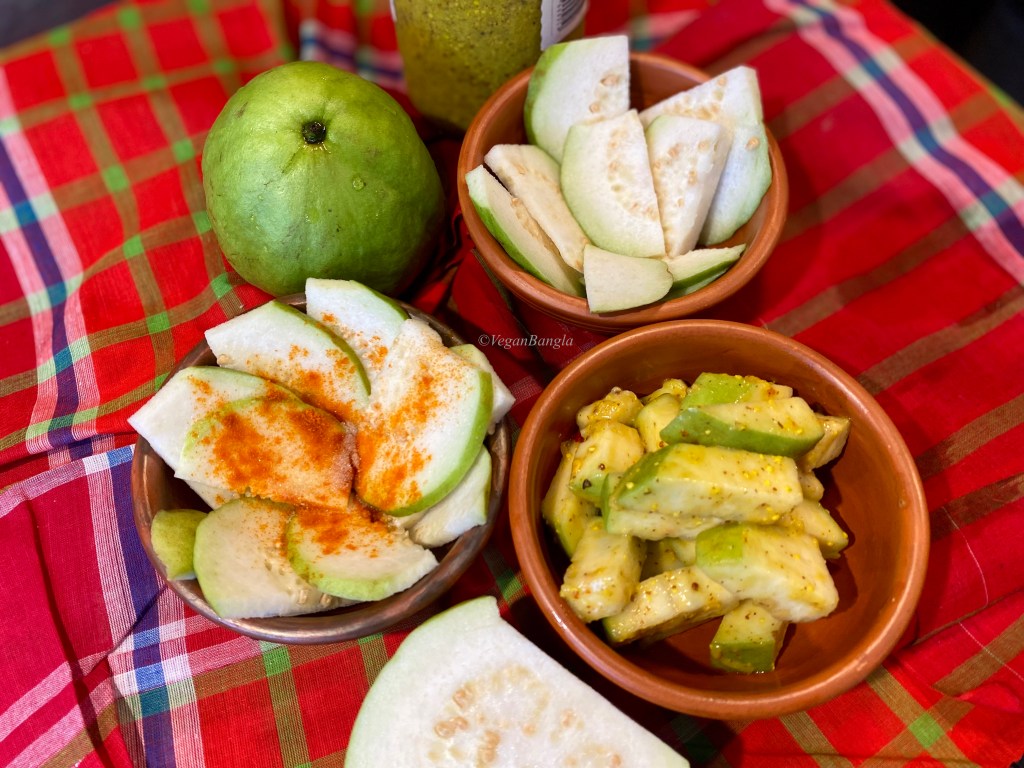
Here’s the three ways to eat guava as a fruit – with Kashundi, or salt and chili or as it is! You certainly can pick your favourite one!
I want to mention our honorable scientist Kazi M. Badruddoza who recently died. He developed one of the variety of guava, called Kazi Peyara, which you can see in this blog. I pay this blog as a tribute to him, thank you Sir for developing our fruit varieties and contributed to reforming the agricultural research of Bangladesh.
 Vegan Bangla